Exercise 0.1 Marks with conventional tools
Having read the beginning of the OCA textile design foundation course, I began by making marks in an A4 sketchbook using different grades of pencils. I followed the descriptive words to channel the marks and help me experiment more.
I found that I liked the bolder softer lines more and they were easier to make marks. I filled several pages of the sketchbook to test out the marks before using large cartridge paper to design my favourites and try them out in a larger format.

I began by getting used to the grades of pencils and tried to see how they would interact with the descriptive words.

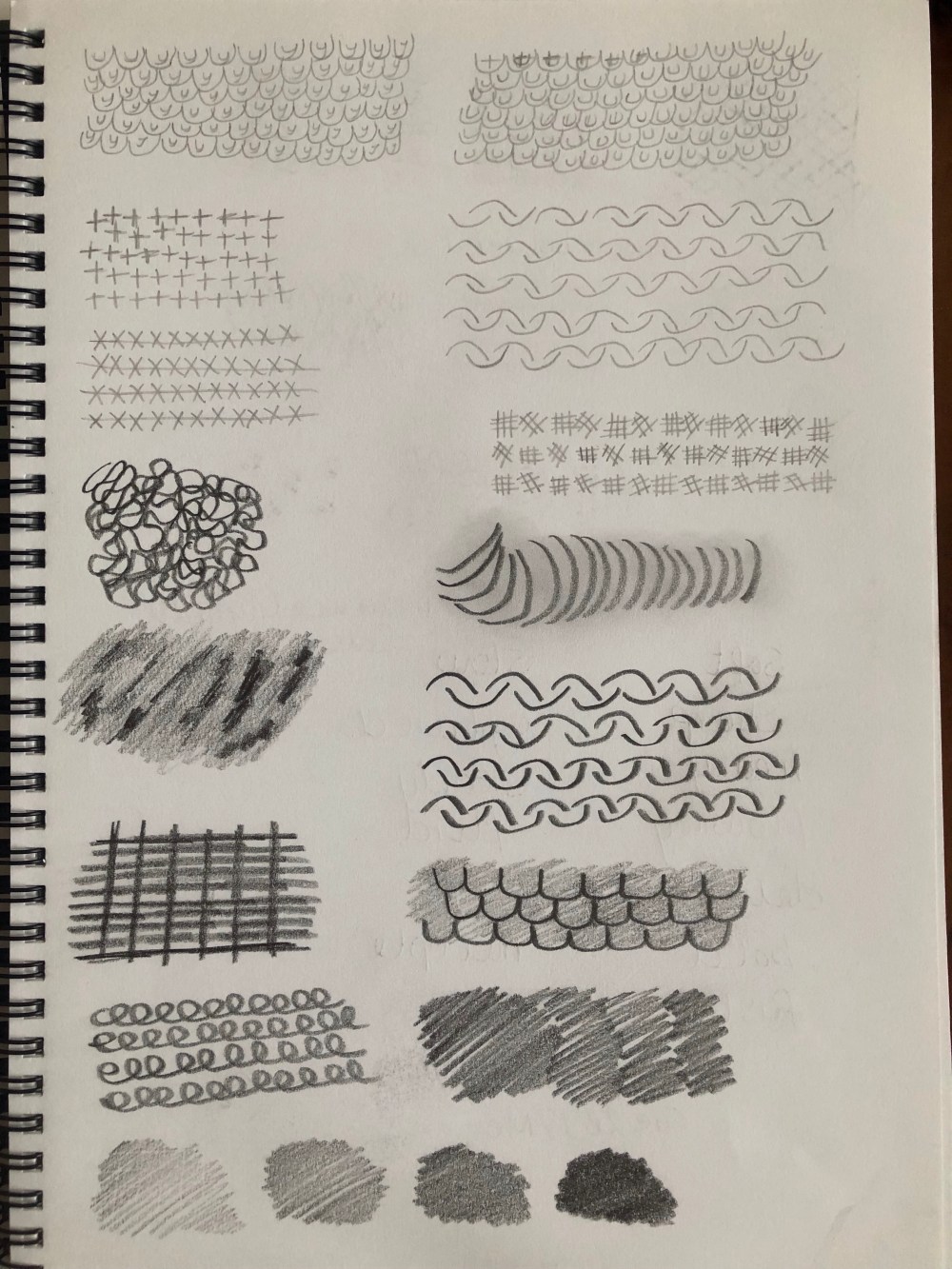
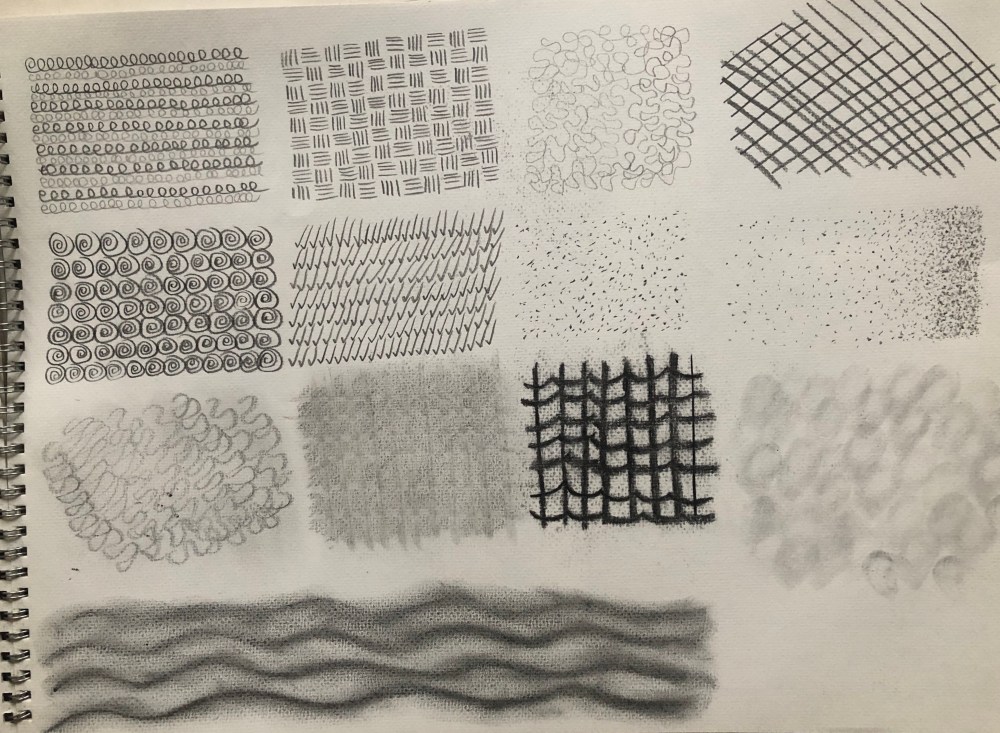
I moved onto my bigger sheets of paper and began seeing how the marks changed when larger. I know I was supposed to start on the larger paper to begin with but my sketchbook worked better for me. I found I preferred holding the pencil as I would if writing as it gave me better control but liked the squiggles I made when holding the pencil right at the end. By holding the pencil right near the tip I could make very bold and heavy marks.

Mark making with pens and ink
Exercise 0.2 Making tools
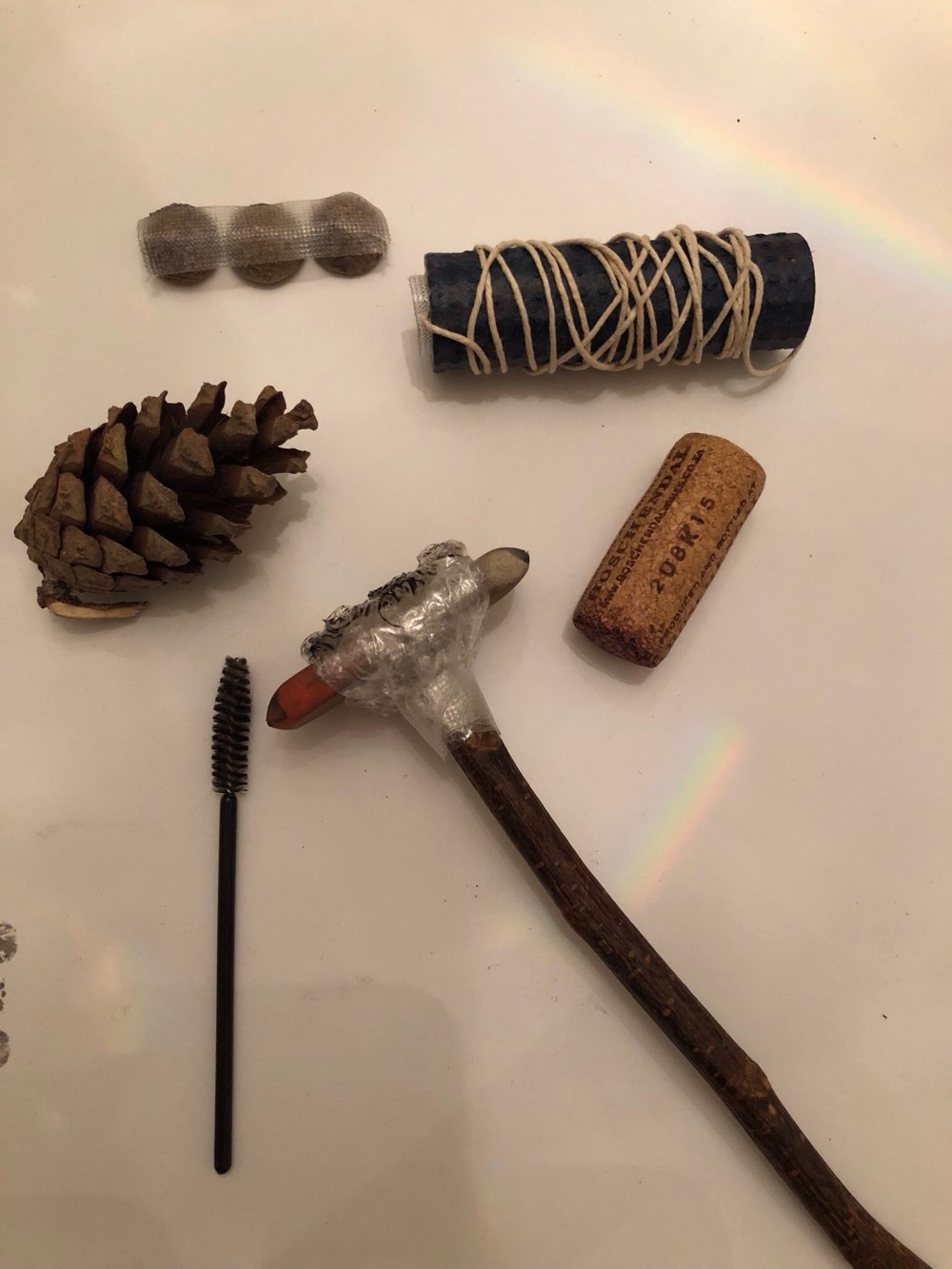

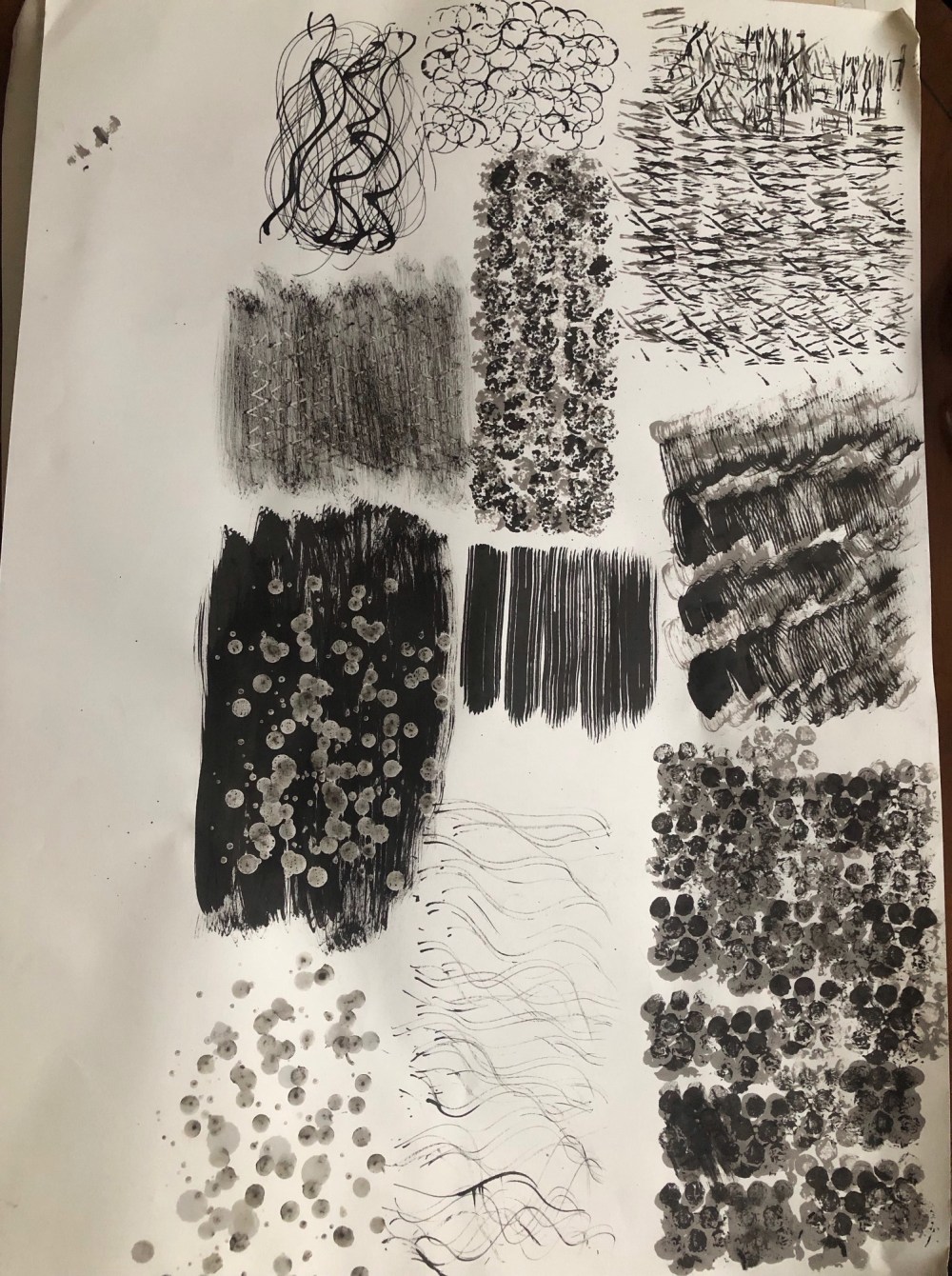
I found that using the bubblewrap stamp and acorn cup stamp limited the marks I could make but did make an interesting pattern. The string dipped in ink gave a good flowing line but I couldn’t have drawn anything complex with it as it was messy to use and the lines were too fluid. The cork also restricted line drawing but it did give me ideas for tools I would use to fill in areas of a collage or drawing as it gave a nice textured imprint.
The best unconventional tools of the set I made were certainly the mascara brush, the end of the toothbrush and I found a thin wooden coffee stirrer which gave more accurate lines when used with black ink.
Exercise 0.3 Negative marks
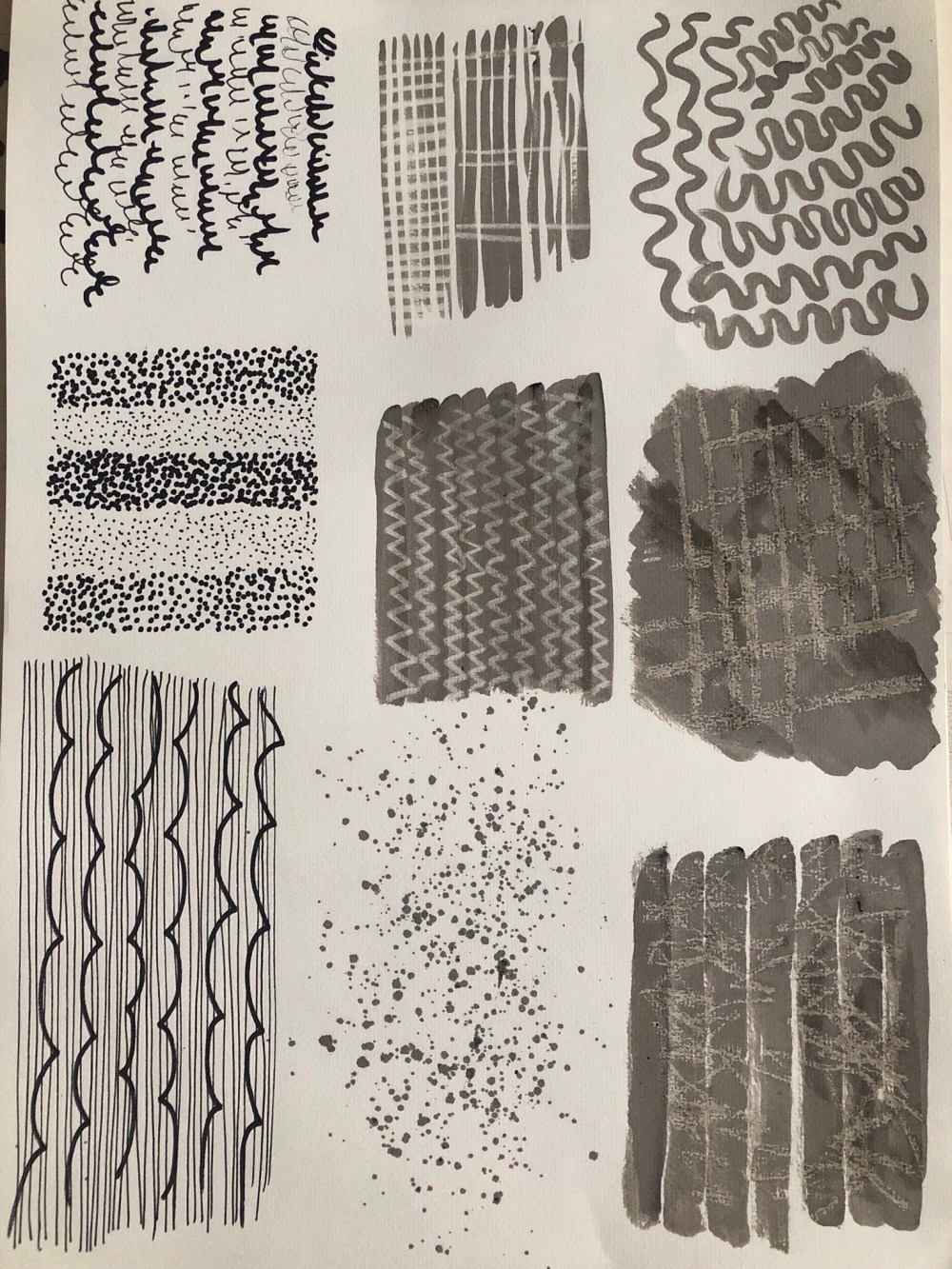
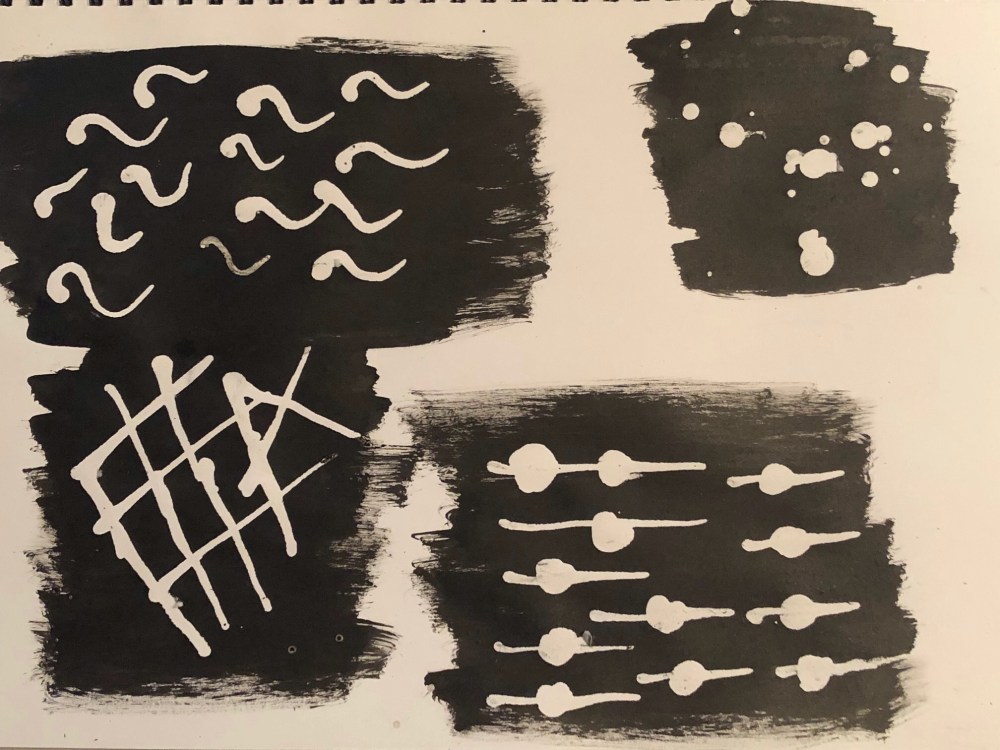
I used some of the unconventional tools to make marks on A3 paper and found the masking fluid needed to be applied thickly rather than a light wash. The stick and end of a paintbrush worked well to distribute the masking fluid, the opposite end of the mascara brush was good as it was smaller and I could draw with it. My first attempt with the masking fluid did not work as I hadn’t left the ink wash long enough to dry and the paper tore. My second attempt was much better and I enjoyed making patterns with the masking fluid and upon removing the dried fluid I liked the way the negative mark looked so white against the black ink. The spots of white did not look as good as the actual lines and shapes as the bigger the shape or pattern, the more effective the colours seemed to look together.
When I was a young child my parents took me to the Tate Modern in London. There was art on canvas and paper as well as installations and I recall looking at one giant canvas which on first glance appeared to be just painted black. However, upon concentrating and looking deeper into the painting I could work out that there were rectangles and other shapes under the top layer of black paint and once I could see them then I could not unsee them. It made me understand depth and to try and look at the layers involved and to break down sections rather than just evaluate the image as a whole.
I decided to try using masking tape as it is a particular favourite of mine, I tore up sections of masking tape and covered an A2 sheet with tape before then going over the sheet with pencil strokes, graphite stick, pen and charcoal. I tried gentler pencil marks and then harder and upon removing the tape, I was really interested in the results.
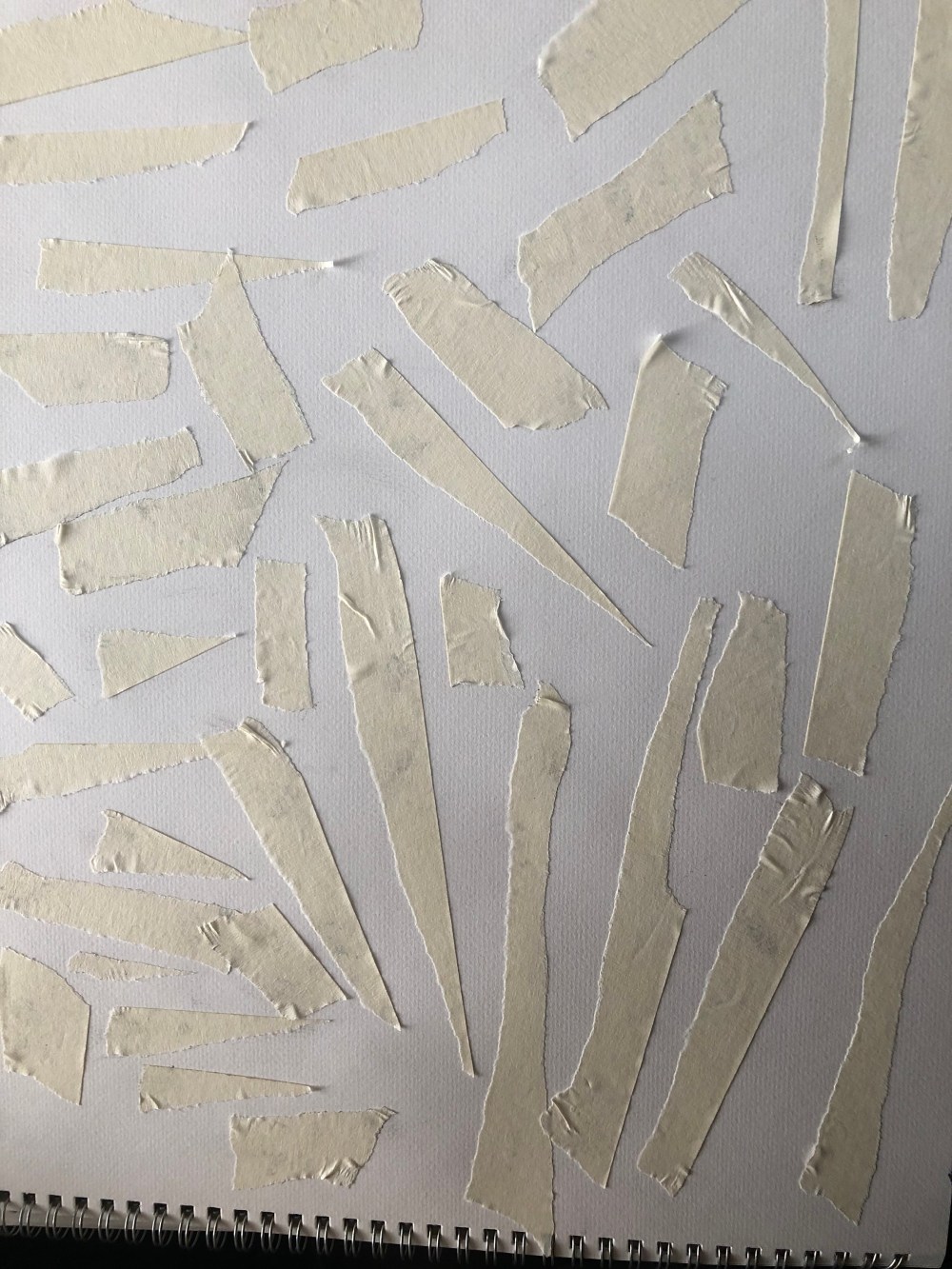
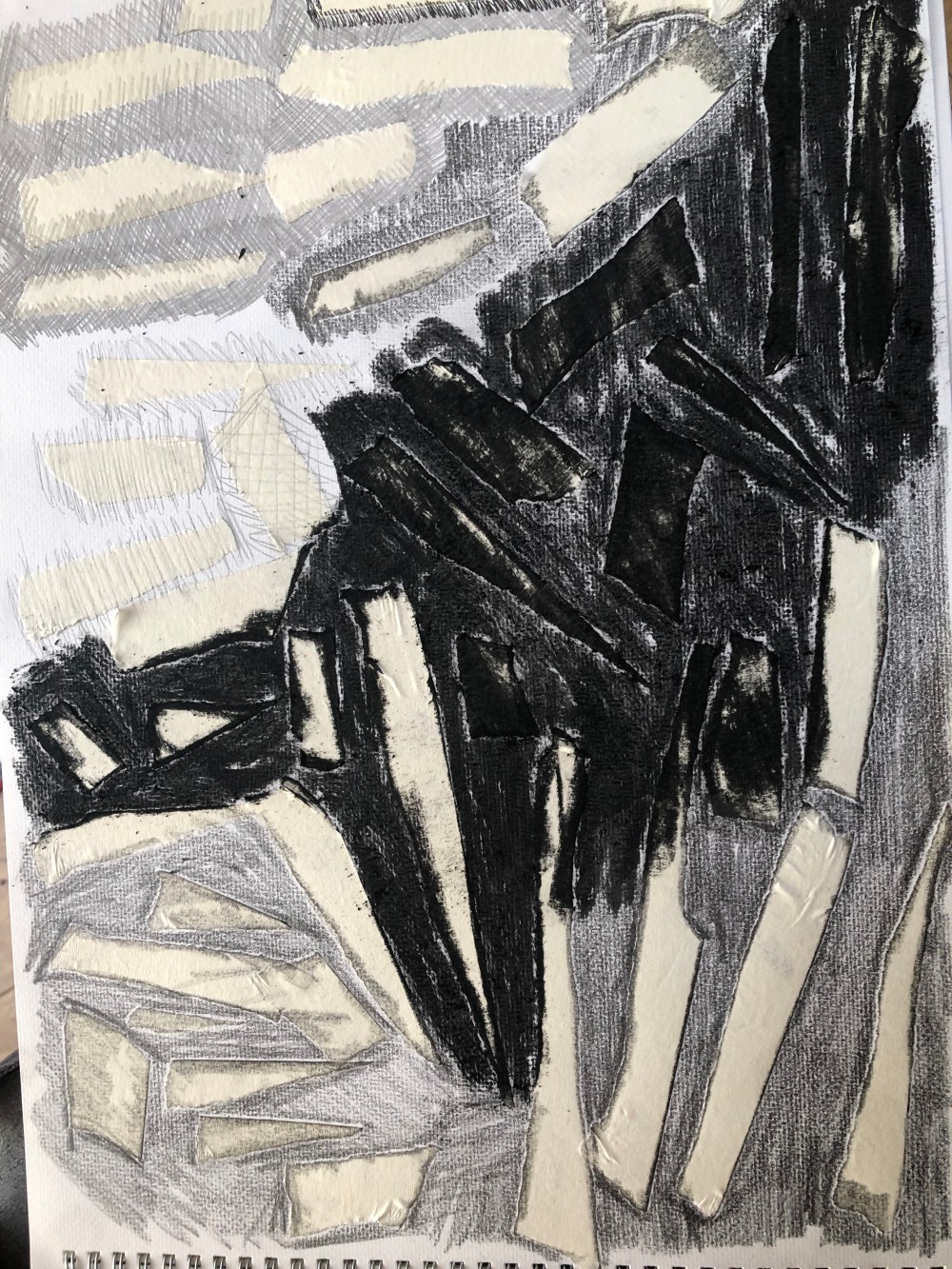
I spent time going over the masking tape using different media before removing the tape.

By going around the edges of some of the tape, a bolder outline was created which interested me. I had used watercolour paper and I liked this as a base as it made the negatives look more three dimensional.
I decided to try another sheet and used masking tape and surgical tape and then did a black ink wash over the top. Once the ink had dried I removed the tape and I loved the starkness of the white against the black and the neat edges. The surgical tape is different as it usually tears in straight lines and has pores so there are tiny black dots in the white areas. This reminded me of pop art comic style where the tiny dots make up the bigger picture.

I then tried a black ink wash on paper and when it had dried I tried drawing on it with white ink. I did not expect the white ink to show up as well as it did and I enjoyed using conventional and unconventional tools to make marks. Using the ink meant that I could create more flowing marks and a variety of styles. Using candle wax also interested me but I found it to make more of a texture and gentler effect than some of the other media I had used.

I have learnt that there are a great many variations of black and white and using different tools and ways of thinking can produce textures and a variety of designs. I would like to develop this further, perhaps as part of a collage and to use the masking fluid on patterned paper and then follow up with a black ink wash to create a kind of negative stained window effect. I definitely want to draw with a black ink wash and white ink as I found that fascinating.
I think using the mark making techniques will help me with drawing and will add depth to work when I’m in the planning and research stage. Having completed the warm up exercises, I am now ready to begin the next part of the course.
 Foundation Textiles